
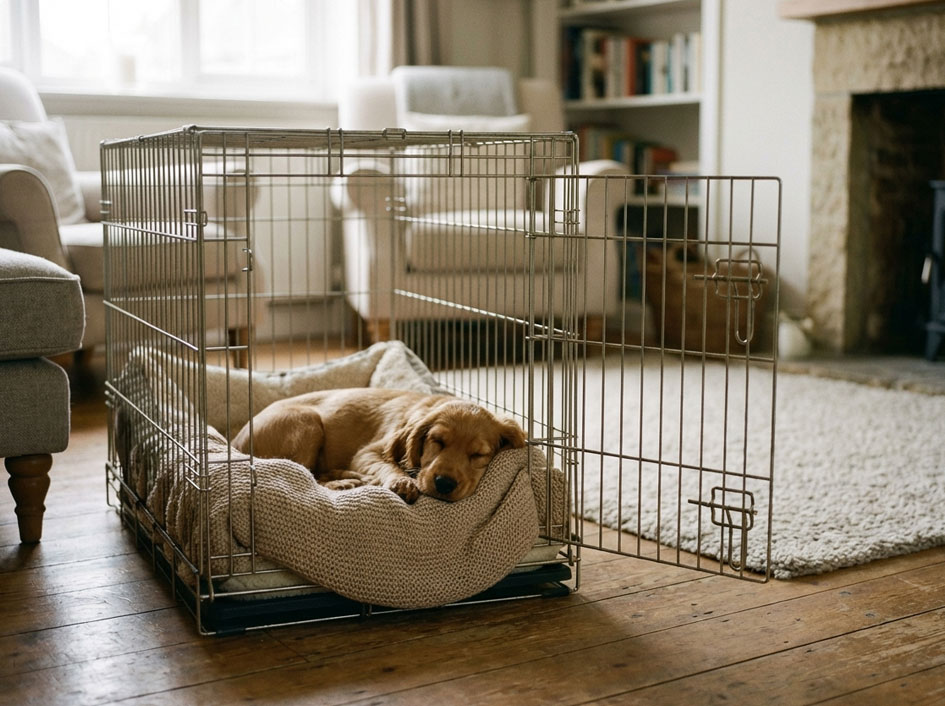
Knowing how to crate train a cocker spaniel, can make everyday life calmer and more predictable — for both you and your dog. Done properly, a crate becomes a place your spaniel chooses to rest, not somewhere they feel shut away.
Working Cockers in particular are energetic, sensitive, and quick to form habits. That means crate training needs to be introduced thoughtfully, with patience and consistency. This guide walks you through how to crate train a Cocker spaniel in a way that builds confidence, not stress.
Quick summary
Crate training a Cocker spaniel works best when you focus on calm, positive experiences and steady progress.
- Introduce the crate slowly and keep it low-pressure
- Build positive associations with food and routine
- Keep sessions short and end on a calm note
- Never use the crate as punishment
- Make sure your dog is properly exercised first
Why crate training works for Cocker spaniels
Cocker spaniels are naturally people-focused, but they also benefit from having a defined space where they can properly switch off. In the wild, dogs seek out enclosed spaces to rest, and a crate can tap into that instinct when introduced correctly.
For working Cockers especially, who often struggle to settle after activity, a crate provides a clear signal that it’s time to rest. It also helps with house training, prevents destructive behaviour, and creates a consistent routine.
Spaniel Brain tip: A Cocker spaniel that has had enough exercise and mental stimulation will usually accept a crate far more easily. Most resistance comes from dogs that still have energy to burn.
Before you start: setting your dog up for success
Good crate training starts before your dog even steps inside. A few small decisions early on make a big difference to how quickly your spaniel settles.
- Choose the right size: your dog should be able to stand, turn, and lie down comfortably without the crate feeling oversized
- Pick a good location: somewhere you spend time, not isolated or tucked away
- Keep it comfortable: soft bedding and a calm environment help your dog relax
- Start at the right time: after a walk or play session, not when your dog is full of energy
Step-by-step: how to crate train a Cocker spaniel
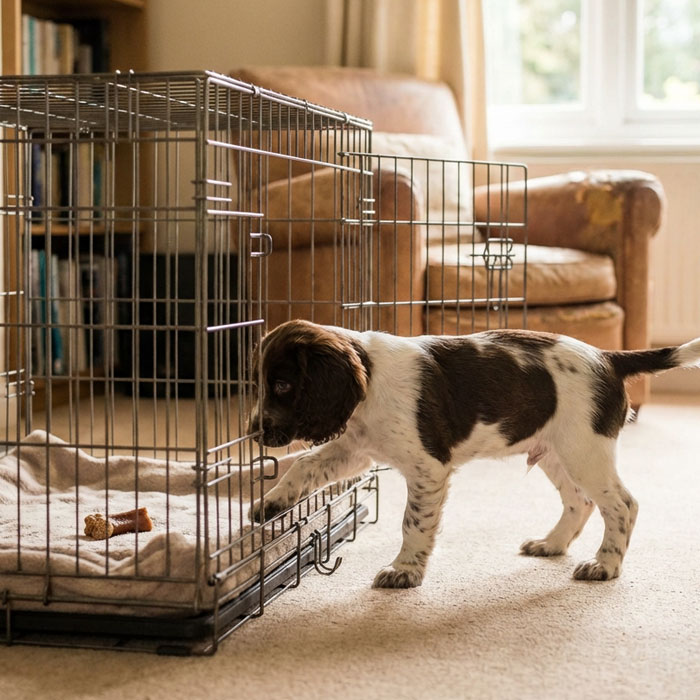
1. Let your dog explore the crate
Place the crate in your main living space and leave the door open. Allow your spaniel to investigate it in their own time without pressure.
You can place a few treats inside or a favourite toy, but the key is to let them choose to go in rather than guiding or pushing them.
2. Build positive associations
Once your dog is comfortable going near or inside the crate, start linking it with good experiences. Feeding meals in the crate is one of the easiest ways to do this.
Keep everything calm and matter-of-fact. The crate should feel like a normal part of daily life, not something special or worrying.
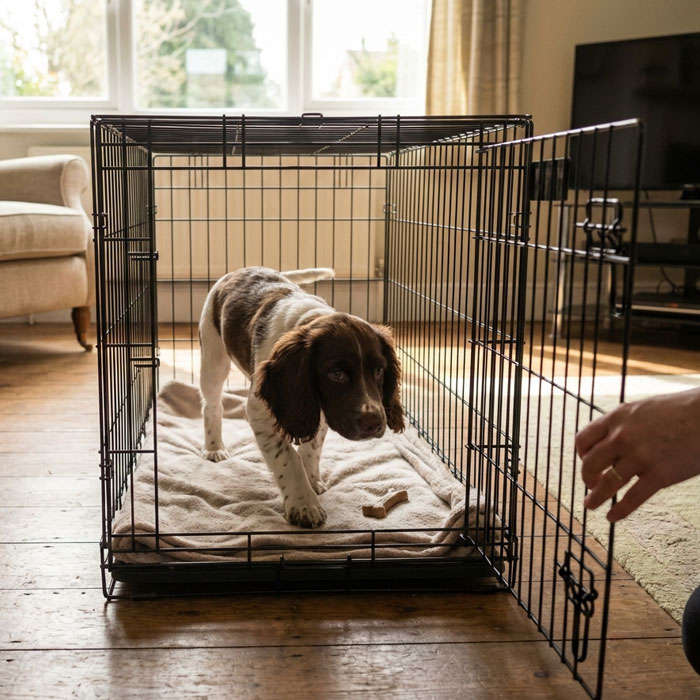
3. Introduce short door closures
When your spaniel is happily going into the crate, begin closing the door for very short periods while you stay nearby.
Start with just a few seconds, then open the door before your dog becomes unsettled. Gradually increase the time over multiple sessions.
4. Extend the time gradually
Increase how long your dog stays in the crate in small, manageable steps. The goal is to build confidence slowly, not test how long they can cope.
If your dog becomes restless or vocal, you’ve likely gone too fast. Drop back to an easier step and rebuild.
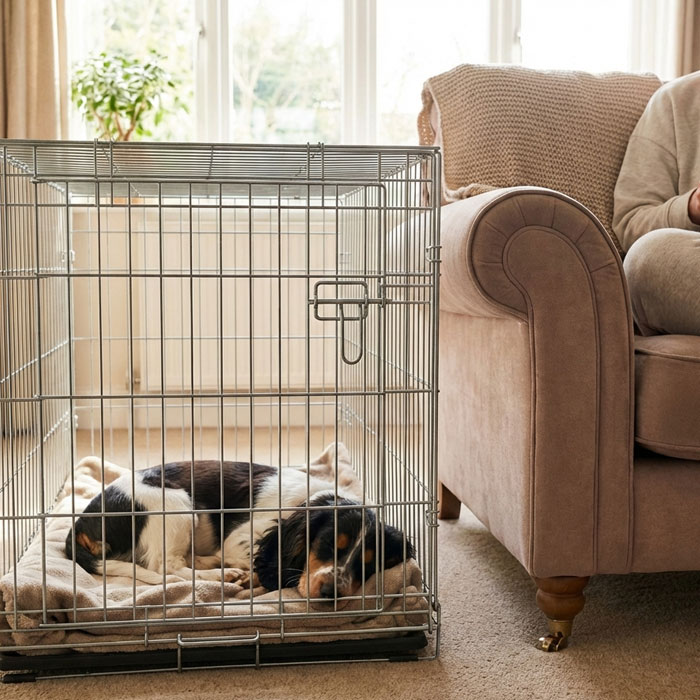
5. Step away briefly
Once your dog is relaxed in the crate with you nearby, begin leaving the room for short periods. Keep departures and returns low-key to avoid creating excitement or anxiety.
This helps your spaniel learn that being alone for short periods is normal and safe.
6. Build a consistent routine
Use the crate at predictable times — after walks, during rest periods, or overnight. Consistency helps your dog understand when to settle and what to expect.
Spaniel Brain tip: End crate sessions while your dog is still calm. Letting them out at the right moment reinforces relaxed behaviour.
Common mistakes to avoid
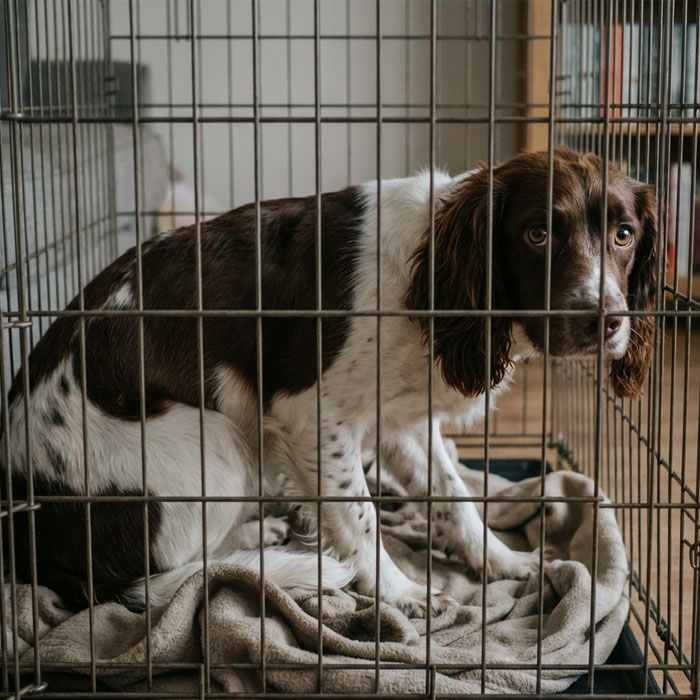
Watch out: pushing too quickly or using the crate as a punishment is one of the fastest ways to create anxiety around it.
- Going too fast: most setbacks come from skipping steps or increasing time too quickly
- Using the crate as punishment: this creates a negative association
- Crating an under-exercised dog: leads to frustration and resistance
- Letting your dog out while they are distressed: can reinforce the wrong behaviour
How long does crate training take?
Most Cocker spaniels begin to settle into crate training within a few days to a couple of weeks, but there is no fixed timeline.
Some dogs take to it quickly, while others need a more gradual approach. Consistency and patience matter far more than speed.
Should you crate a Cocker spaniel at night?
Crating at night is common, particularly for puppies. It can support house training and prevent unwanted behaviour while your dog is still learning.
Place the crate somewhere your dog feels secure, and keep the setup comfortable. Many Cockers settle better if the crate is near their owner, especially in the early stages.
When not to use a crate
Crates are useful, but they are not suitable for every situation.
- If your dog shows signs of severe separation anxiety
- If they are consistently distressed even with gradual training
- If the crate is being used for long periods without breaks
In these cases, it’s better to step back and address the underlying issue rather than pushing forward.
Choosing the right crate
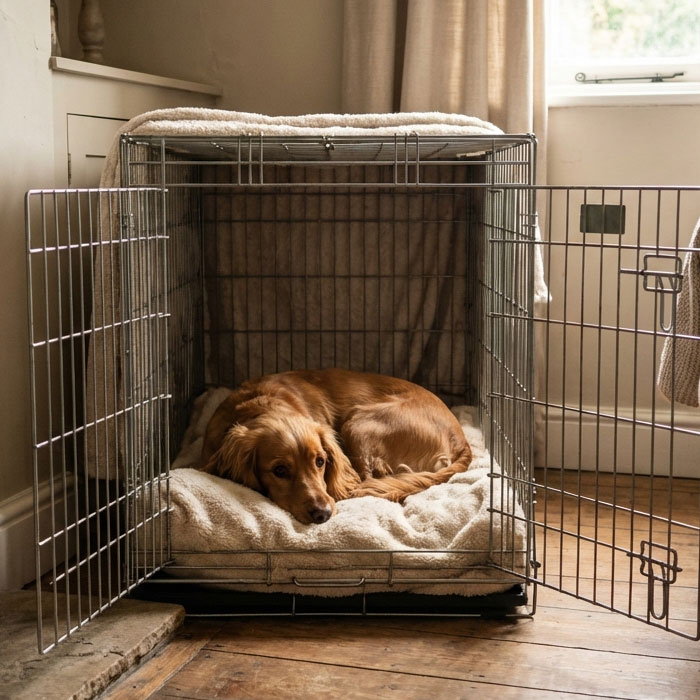
The crate itself plays a big role in how easy training feels. For most working Cocker spaniels, a 42 inch crate provides a good balance of space and structure.
If you’re still deciding, you can compare the best options here:
See the best crates for working Cocker spaniels
Final thoughts
Crate training a Cocker spaniel is less about teaching a rule and more about building a habit. When done properly, it gives your dog a place to relax and helps bring structure to their day.
Take your time, keep things calm, and focus on small wins. With the right approach, most Cockers learn to settle in a crate without stress.